As stupefyingly powerful as world-class bullies Rush Limbaugh and Grover
Norquist
have become over the last 20 years, I'm guessing both of them vividly
imagined the political clout they
coveted before they acquired it. And, since amassing that hefty say-so,
like a couple of little poobahs, they certainly have both reveled in it.
Still, bullies are always cowards at heart. Furthermore, once the
position on high is assumed, recognizing what an approaching downfall
will look like inevitably becomes difficult for a bully out of touch
with everyday people. That sort of indifference used to be called
"riding for a fall."
Limbaugh and Norquist aren't alone. In general, it seems, rightwing
political bosses who have prospered from throwing sand in the
gears of progress can’t yet grasp the truth -- change has happened.
Although no
one should mistake most of today’s Democrats for staunch defenders of
what the liberal champions of the previous century accomplished, the
nation’s long slow drift to the right -- away from its moorings --
appears to have ended.
The culture has shifted. Now the people seem to be leading the so-called
leaders. With 2013 on the horizon a goodly portion of the electorate
suddenly appears to be more left-leaning than most elected Democrats.
It’s obvious the noisy influence of the Tea Party is shriveling like a drenched witch. Rush and
Grover are in denial -- they still don’t see the lengthening
shadows creeping over their day in the sun as bosses.
The end always surprises the bully.
Saturday, December 15, 2012

Tuesday, December 4, 2012
The Lamest Duck in Town
Virginia is unique in that it doesn’t allow a sitting governor to run
for reelection. So once they’re done with their gubernatorial gig, in
recent cycles former governors have been tending to run for the U.S.
Senate … with varying degrees of success.
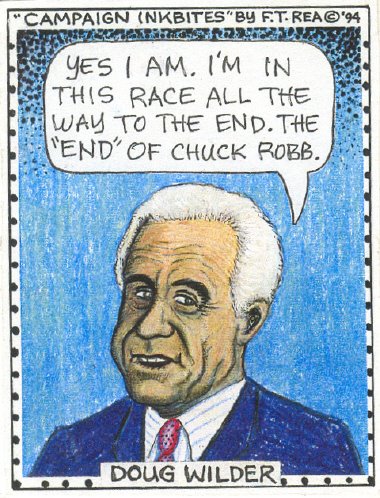
Elected governor in 1989, Doug Wilder split with the Democratic Party
and ran for the Senate as an Independent in a wild four-way race in
1994. About a month before Election Day, the mercurial Wilder suddenly
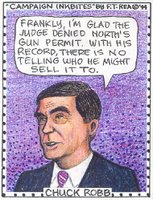
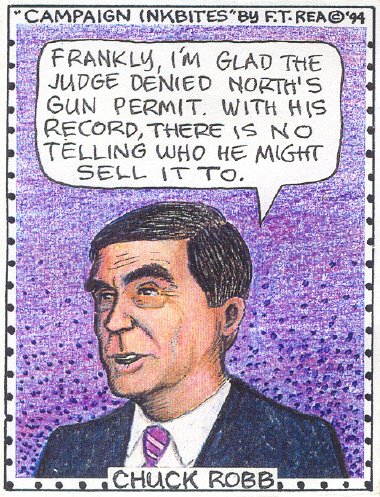
withdrew and the incumbent, Chuck Robb, a former Democratic governor,
himself, was reelected.
Robb then lost the next time out to George Allen, who took the seat from him in 2000. In 2006 Allen lost his bid for reelection to Sen. Jim Webb, who is enjoying his last month at that job. With the seat opening back up, this year, Allen thought he saw an opportunity for redemption, but it turned out Virginians had already had more than enough of him.
 You can stick a fork in Allen's career as a politician who can raise money to run for office in Virginia; it's done.
Over the last four years the senatorial races have matched the commonwealth‘s last four governors: Jim Gilmore lost to Mark Warner in 2008. This year Allen lost to Tim Kaine, who will be replacing Webb.
So, counting Webb’s rather surprising victory six years ago, with regard to the Senate, that’s a trend. Three statewide elections over six years is a winning streak and the next time up in 2014 isn’t looking so good for Republicans, either.
Put together with the fact that Barack Obama has carried Virginia twice, and it makes Bob McDonnell’s win in 2009 look like it was perhaps a fluke. It was the year of the Tea Party’s noisy emergence and the Democrats nominated a nice guy who proved to be an exceptionally weak candidate.
Given the most recent election results to consider, the Tea Party's influence in Virginia, and elsewhere, seems to be declining. And, like it or not, Virginia’s thought-to-be purple electorate is looking more bluish every day.
As a Republican governor going into his last year in office, no doubt, McDonnell must wonder about his future. His blatant campaigning to be Mitt Romney’s running mate this year left McDonnell looking more foolish than eager.
With the emergence of Ken Cuccinelli as the presumptive gubernatorial nominee for the GOP, instead of McDonnell’s man -- Bill, ah, what’s his name? -- Gov. McDonnell doesn’t even seem to be wielding much power within his own political party. And, running against the ever popular Warner in 2014 can’t look but so inviting to McDonnell.
How much influence McDonnell -- the lamest duck in town -- will have over the upcoming General Assembly session remains to be seen. With stubbornness being what it is, no one should be surprised to see more demonstrations in Capitol Square protesting his party's most controversial proposals. All of which will probably put the clumsy McDonnell in a bad light, again.
 As far as the Flat-Earth-ers are concerned, they’ve got one of their
stars, The Cooch, in place to carry their heavy, backward-looking brand
of conservatism forth. With his various failed legal actions,
supposedly done in the interests of all Virginians, he has become a
partisan hero to those on the Tea Party side of the split within the Republican Party.
As far as the Flat-Earth-ers are concerned, they’ve got one of their
stars, The Cooch, in place to carry their heavy, backward-looking brand
of conservatism forth. With his various failed legal actions,
supposedly done in the interests of all Virginians, he has become a
partisan hero to those on the Tea Party side of the split within the Republican Party.
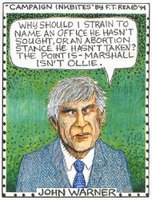
Which, speaking of political history in the Old Dominion, will bitterly divide the Virginia GOP, once again. Don't forget what Ollie North and Marshall Coleman did in 1994 to help reelect Robb. This fault line in the GOP has been there for decades. And, the way it looks now, there's not much this sitting governor can do to prevent the divide from widening again in 2013.
Quack!
 |
| Click on image to enlarge. |
Robb then lost the next time out to George Allen, who took the seat from him in 2000. In 2006 Allen lost his bid for reelection to Sen. Jim Webb, who is enjoying his last month at that job. With the seat opening back up, this year, Allen thought he saw an opportunity for redemption, but it turned out Virginians had already had more than enough of him.
 You can stick a fork in Allen's career as a politician who can raise money to run for office in Virginia; it's done.
 Over the last four years the senatorial races have matched the commonwealth‘s last four governors: Jim Gilmore lost to Mark Warner in 2008. This year Allen lost to Tim Kaine, who will be replacing Webb.
So, counting Webb’s rather surprising victory six years ago, with regard to the Senate, that’s a trend. Three statewide elections over six years is a winning streak and the next time up in 2014 isn’t looking so good for Republicans, either.
Put together with the fact that Barack Obama has carried Virginia twice, and it makes Bob McDonnell’s win in 2009 look like it was perhaps a fluke. It was the year of the Tea Party’s noisy emergence and the Democrats nominated a nice guy who proved to be an exceptionally weak candidate.
Given the most recent election results to consider, the Tea Party's influence in Virginia, and elsewhere, seems to be declining. And, like it or not, Virginia’s thought-to-be purple electorate is looking more bluish every day.
As a Republican governor going into his last year in office, no doubt, McDonnell must wonder about his future. His blatant campaigning to be Mitt Romney’s running mate this year left McDonnell looking more foolish than eager.
With the emergence of Ken Cuccinelli as the presumptive gubernatorial nominee for the GOP, instead of McDonnell’s man -- Bill, ah, what’s his name? -- Gov. McDonnell doesn’t even seem to be wielding much power within his own political party. And, running against the ever popular Warner in 2014 can’t look but so inviting to McDonnell.
How much influence McDonnell -- the lamest duck in town -- will have over the upcoming General Assembly session remains to be seen. With stubbornness being what it is, no one should be surprised to see more demonstrations in Capitol Square protesting his party's most controversial proposals. All of which will probably put the clumsy McDonnell in a bad light, again.
 As far as the Flat-Earth-ers are concerned, they’ve got one of their
stars, The Cooch, in place to carry their heavy, backward-looking brand
of conservatism forth. With his various failed legal actions,
supposedly done in the interests of all Virginians, he has become a
partisan hero to those on the Tea Party side of the split within the Republican Party.
As far as the Flat-Earth-ers are concerned, they’ve got one of their
stars, The Cooch, in place to carry their heavy, backward-looking brand
of conservatism forth. With his various failed legal actions,
supposedly done in the interests of all Virginians, he has become a
partisan hero to those on the Tea Party side of the split within the Republican Party. Which, speaking of political history in the Old Dominion, will bitterly divide the Virginia GOP, once again. Don't forget what Ollie North and Marshall Coleman did in 1994 to help reelect Robb. This fault line in the GOP has been there for decades. And, the way it looks now, there's not much this sitting governor can do to prevent the divide from widening again in 2013.
Quack!
-- The illustrations are from a series of cards I did in 1994 about the U.S. Senate race that year.
Monday, November 12, 2012
Redskins Bandwagon, Not So Fast
On March 8, writing for the Richmond Times-Dispatch, Michael Martz and John O‘Connor reported that the Washington Redskins and the City of Richmond had been talking about the pro football team conducting some of its preseason practices in Richmond in years to come.
Although I was somewhat puzzled with why the team’s front office would want to leave Northern Virginia, to hold three weeks of preseason football practices in Richmond, in July! it was delightful news. Naturally, I hoped for the best. After all, I’ve been a Washington Redskins fan longer than I can remember. It goes back to when I was a little boy watching games with my grandfather, who was a Redskins fan.
He was also a WWI veteran, so I’m thinking about him today.
On June 6, the RT-D’s Olympia Meola reported bigger news about the Redskins, this time from Gov. Bob McDonnell’s office.
On June 30, Robert Zullo wrote in the RT-D about a search committee devoted to finding the best site for the Redskins to conduct their practices next summer. The article said the committee would report its finding in mid-September.
On Aug. 31 Michael Martz reported on the site-choosing process.
It reminded me of when the Richmond Flying Squirrels pretended they were letting the fans pick the nickname for the team. But for a baseball franchise to use an old radio station type of phony contest, to drum up interest, was fine. And, it worked like a charm.
However, for a city to indulge in such a bogus promotion didn't make much sense to me. So, I wondered, what else could it be?
Then, on Oct. 23, came the devilish details: The Redskins/Richmond deal involves Bon Secours Health System, the old Westhampton school building and the grounds surrounding it. It also involves another development in the East End by Bon Secours. It's very complicated. Ordinarily, it would take months for a Richmond City Council to properly study such a far-flung agreement.
And, this piece by STYLE Weekly's Scott Bass followed on Oct. 30.
It looks to me like the mayor is trying to steamroll this thing through. That doesn’t mean anything illegal has been done. It doesn’t mean it’s a bad deal for tax payers in Richmond. What it does mean is that the mayor needs to be taught a lesson about what can happen to a guy who is too pushy.
Vote on Redskins deal tonight?
Please, not so fast. And, didn't we just have an election? What do new members of council think?
City Hall needs to sell us this deal. City Council members, new and old, need to ask lots of questions of the salesmen who are in such a hurry.
Although I was somewhat puzzled with why the team’s front office would want to leave Northern Virginia, to hold three weeks of preseason football practices in Richmond, in July! it was delightful news. Naturally, I hoped for the best. After all, I’ve been a Washington Redskins fan longer than I can remember. It goes back to when I was a little boy watching games with my grandfather, who was a Redskins fan.
He was also a WWI veteran, so I’m thinking about him today.
On June 6, the RT-D’s Olympia Meola reported bigger news about the Redskins, this time from Gov. Bob McDonnell’s office.
The Washington Redskins will move their summer training camp to the city of Richmond in 2013, at a site not yet identified.Although "a site not yet identified" seemed strange, at first that didn't worry me. Hail to the Redskins!
On June 30, Robert Zullo wrote in the RT-D about a search committee devoted to finding the best site for the Redskins to conduct their practices next summer. The article said the committee would report its finding in mid-September.
A panel appointed by Mayor Dwight C. Jones will consider at least 10 city sites for the Washington Redskins summer training camp that is planned to arrive in Richmond next year. The 18-member committee is composed chiefly of representatives from local business, banking and higher education and is tasked with advising the mayor's office on locations and financing related to hosting the three-week training camp.The process that followed did begin to raise worries. At first I thought they were doing it backwards. Why conduct a study that should have been done before the Redskins and Richmond announced they had come to an agreement for a deal?
On Aug. 31 Michael Martz reported on the site-choosing process.
Richmond Mayor Dwight C. Jones says he has two "very good" sites for the Washington Redskins to bring their training camp next summer — City Stadium or behind the Science Museum of Virginia. Now, the city has to find $9 million to $10 million to build the facilities the NFL franchise expects at one of the sites by July.By this time it looked to me like the decision had been made behind closed doors to use the behind the Science Museum option, but for some reason the mystery was being perpetuated. Why the dog and pony show?
"Now we are in a position to put our (funding and sponsorship subcommittee) to work and figure out how we're going to bring in the money to get the job done," Jones said at a news conference Thursday at the McGuireWoods law firm in downtown Richmond.
It reminded me of when the Richmond Flying Squirrels pretended they were letting the fans pick the nickname for the team. But for a baseball franchise to use an old radio station type of phony contest, to drum up interest, was fine. And, it worked like a charm.
However, for a city to indulge in such a bogus promotion didn't make much sense to me. So, I wondered, what else could it be?
Then, on Oct. 23, came the devilish details: The Redskins/Richmond deal involves Bon Secours Health System, the old Westhampton school building and the grounds surrounding it. It also involves another development in the East End by Bon Secours. It's very complicated. Ordinarily, it would take months for a Richmond City Council to properly study such a far-flung agreement.
And, this piece by STYLE Weekly's Scott Bass followed on Oct. 30.
"We don't think a 'rush job' is fair to the public nor in the best interests of the city," Loupassi and Goldman write.Today’s RT-D story, “Richmond council set to vote on Redskins deal tonight,” by Robert Zullo, adds more to my sense that timing had a lot to do with the way this has played out. Now City Council is under the gun to act swiftly. Members don’t have much time to ask questions about all the facets of this deal.
Indeed, the mayor gleefully tells reporters at the Leigh Street Redskins site Oct. 22 that construction could start as soon as that afternoon. "The Redskins want to be ready to use this in 2013 so you might see something happening before you leave here today," Jones says to hearty chuckles. "It's got to happen very fast."
It looks to me like the mayor is trying to steamroll this thing through. That doesn’t mean anything illegal has been done. It doesn’t mean it’s a bad deal for tax payers in Richmond. What it does mean is that the mayor needs to be taught a lesson about what can happen to a guy who is too pushy.
Vote on Redskins deal tonight?
Please, not so fast. And, didn't we just have an election? What do new members of council think?
City Hall needs to sell us this deal. City Council members, new and old, need to ask lots of questions of the salesmen who are in such a hurry.
Thursday, November 8, 2012
What Can Stop the GOP’s Meltdown?
The day after the election, Wednesday, I declared a one-day moratorium on gloating and sarcasm over the election results. In the same spirit, I resisted the urge to offer advice to any Republicans I encountered. At happy hour at Chiocca’s, facing a few grumbling conservatives who were itching to harass a handy liberal, it wasn’t easy to stay true to that spirit of restraint.
Now the moratorium is over.
Accordingly, on Thursday, the Republicans who got their collective ass kicked royally on Tuesday, ought to take a good look at some bad moves they’ve made since they celebrated their midterm victories in 2010. They need to cast off their my-way-or-no-way blinders, pronto.
If they do they might see that the explanation for several of the losses the Republican Party absorbed on Tuesday was tied to how much the USA has changed in recent years. The percentage of the total vote that is white male has been steadily shrinking and it's going to continue to do so.
Which means it’s time for some conservative old goats to face the music.
Speaking of goats, if the Republican Party continues to allow the likes of Karl Rove, Grover Norquist and Rush Limbaugh to shape its agenda, while those three guys will do just fine, the GOP itself will continue its meltdown.
The Tea Party-driven strategy the congressional Republicans have used for the last two years blatantly turned its back on solving problems. Their only goal was to deny any success whatsoever to the president, in order to defeat him on Nov. 6. No doubt, if they continue to try to sell their obstructionism as patriotism, they do so at their own peril.
Given Tuesday’s results, it seems that nefarious strategy backfired. Now, facilitated by their own noisy denials of post-election reality, the meltdown process is intensifying.
Conservatives who despise the union movement have been bashing teachers as if they are the problem with government spending. Forget about borrowing money to prosecute wars, it’s the teachers! In doing so, Republicans come off as anti-public education and that will never set well with middle class parents and young voters.
Last night, professional wiseass Andy Borowitz wrote on his Facebook page: “To survive as a party, the Republicans need to welcome people who believe in different things than they do, like science and math.”
Feeling it had the momentum to elect almost anybody, the arrogant GOP fielded some Looney Tunes villains as candidates in 2012.
At the top of that list was Missouri’s senatorial candidate, Todd “Legitimate Rape” Akin. As Akin is a plain fool, the Republican powers that be in the Show Me State had to know that. But it looks like they mistakenly thought anybody could beat Claire McCaskill.
In Virginia, George “Macaca” Allen was another obviously bad candidate. He was damaged goods and Virginia Republicans knew that. But they must have figured it was in the bag, anyway.
Hey, couldn’t almost anybody could beat that liberal Obama ally, Chairman Tim Kaine?
Apparently there was a good amount of ticket splitting in the Old Dominion, where Romney voters couldn’t vote the straight ticket, if it meant supporting Allen, a man widely viewed as an obnoxious bully.
A big part of how Republicans in Missouri and Virginia could believe those two Democratic candidates would be easy to beat was that so many conservatives live in a virtual echo chamber when it comes to following politics. They see most of the mainstream media as prevaricating liberal tools, so they put their faith in the Fox News brand of truth and parrot its talking points.
No one should be surprised when bad candidates lose.
Like it or not, running a national campaign is the test for president. It may not be the best way to audition candidates for the job and campaign finance reform is sorely needed, but as of 2012, it’s what our system provides.
Well, Obama’s advisers just ran a masterful campaign. They targeted the key battleground states and won them. Colorado! Iowa! Nevada! New Hampshire! Ohio! Virginia! Wisconsin! Lots of young voters look at those results without seeing ideology.
No, they see competency.
At long last, Republicans have to accept that when they use thinly-veiled appeals to racists, as they did repeatedly during the 2012 campaign, they are constricting their party’s growth. Such tone-deaf reaching out to the most hateful elements of the electorate has to stop.
The same goes with opposing same-sex marriage and trying to outlaw abortion. The justification for those two backward positions is tied to old time religion, and they are both killer millstones.
While I could easily go on lecturing my stubborn happy hour pals and their ilk, instead I’ll sum it up this way:
Unless Republicans can learn from their mistakes and start to articulate a smart, up-to-date approach to conservatism, one that appeals to tomorrow’s multicultural voters that might want to see more imagination, efficiency and prudence in the way government does business … then, tha, tha, that’s all folks!
Now the moratorium is over.
Accordingly, on Thursday, the Republicans who got their collective ass kicked royally on Tuesday, ought to take a good look at some bad moves they’ve made since they celebrated their midterm victories in 2010. They need to cast off their my-way-or-no-way blinders, pronto.
If they do they might see that the explanation for several of the losses the Republican Party absorbed on Tuesday was tied to how much the USA has changed in recent years. The percentage of the total vote that is white male has been steadily shrinking and it's going to continue to do so.
Which means it’s time for some conservative old goats to face the music.
Speaking of goats, if the Republican Party continues to allow the likes of Karl Rove, Grover Norquist and Rush Limbaugh to shape its agenda, while those three guys will do just fine, the GOP itself will continue its meltdown.
The Tea Party-driven strategy the congressional Republicans have used for the last two years blatantly turned its back on solving problems. Their only goal was to deny any success whatsoever to the president, in order to defeat him on Nov. 6. No doubt, if they continue to try to sell their obstructionism as patriotism, they do so at their own peril.
Given Tuesday’s results, it seems that nefarious strategy backfired. Now, facilitated by their own noisy denials of post-election reality, the meltdown process is intensifying.
Conservatives who despise the union movement have been bashing teachers as if they are the problem with government spending. Forget about borrowing money to prosecute wars, it’s the teachers! In doing so, Republicans come off as anti-public education and that will never set well with middle class parents and young voters.
Last night, professional wiseass Andy Borowitz wrote on his Facebook page: “To survive as a party, the Republicans need to welcome people who believe in different things than they do, like science and math.”
Feeling it had the momentum to elect almost anybody, the arrogant GOP fielded some Looney Tunes villains as candidates in 2012.
At the top of that list was Missouri’s senatorial candidate, Todd “Legitimate Rape” Akin. As Akin is a plain fool, the Republican powers that be in the Show Me State had to know that. But it looks like they mistakenly thought anybody could beat Claire McCaskill.
In Virginia, George “Macaca” Allen was another obviously bad candidate. He was damaged goods and Virginia Republicans knew that. But they must have figured it was in the bag, anyway.
Hey, couldn’t almost anybody could beat that liberal Obama ally, Chairman Tim Kaine?
Apparently there was a good amount of ticket splitting in the Old Dominion, where Romney voters couldn’t vote the straight ticket, if it meant supporting Allen, a man widely viewed as an obnoxious bully.
A big part of how Republicans in Missouri and Virginia could believe those two Democratic candidates would be easy to beat was that so many conservatives live in a virtual echo chamber when it comes to following politics. They see most of the mainstream media as prevaricating liberal tools, so they put their faith in the Fox News brand of truth and parrot its talking points.
No one should be surprised when bad candidates lose.
Like it or not, running a national campaign is the test for president. It may not be the best way to audition candidates for the job and campaign finance reform is sorely needed, but as of 2012, it’s what our system provides.
Well, Obama’s advisers just ran a masterful campaign. They targeted the key battleground states and won them. Colorado! Iowa! Nevada! New Hampshire! Ohio! Virginia! Wisconsin! Lots of young voters look at those results without seeing ideology.
No, they see competency.
At long last, Republicans have to accept that when they use thinly-veiled appeals to racists, as they did repeatedly during the 2012 campaign, they are constricting their party’s growth. Such tone-deaf reaching out to the most hateful elements of the electorate has to stop.
The same goes with opposing same-sex marriage and trying to outlaw abortion. The justification for those two backward positions is tied to old time religion, and they are both killer millstones.
While I could easily go on lecturing my stubborn happy hour pals and their ilk, instead I’ll sum it up this way:
Unless Republicans can learn from their mistakes and start to articulate a smart, up-to-date approach to conservatism, one that appeals to tomorrow’s multicultural voters that might want to see more imagination, efficiency and prudence in the way government does business … then, tha, tha, that’s all folks!
-- 30 --
Tuesday, October 30, 2012
Behind the Conservative Mask
Many of today’s most outspoken conservatives are merely anti-liberals,
people who wouldn‘t know a traditional conservative ideal if they
stepped in it.
Why?
Over the last 20 years the political education of the blowhard wing of the Republican Party has come primarily by way of living within a talk radio echo chamber. They've learned to consider liberals as book-learned pansies who favor socialism … whatever that particular ism might be.
Millions of so-called conservatives are supporting former-Gov. Mitt Romney this year. Many of them aren't so keen on Romney. But since they see President Barack Obama as a flaming liberal, they can eagerly embrace Romney, the anti-liberal candidate.
Legions of today’s conservatives have been taught by self-styled pundits to hate a government that wants to take their money and give it to foreigners and lazy people who deserve nothing. These Dittohead conservatives view those who favor such a forced redistribution of wealth -- tax-and-spend liberals! -- as their sworn enemies.
Yet, when it came to financing collective endeavors, such as roads and schools, old fashioned conservatives, like Virginia's Sen. Harry F. Byrd, believed it was more prudent to tax than borrow. In the past, conservatives in Virginia supported the principle that government-backed banks should be extra careful with other people’s money.
At one time, American conservatives generally opposed risky military adventures overseas. Too many of today's trash-talking conservatives seem to believe the White House can and should decide who occupies the seats of power in lots of other countries.
Destroying nature in pursuit of profits does not conserve, it doesn‘t cherish and protect what was left to us. To a hedonist, squandering an inheritance might sound like fun. Still, it’s anything but conservative.
Saying the world was created in six days and that it is only 10,000 years old isn't as conservative as it is stubbornly ignorant. While it might be fun to pretend the Flintstones cartoons are documentaries, with dinosaurs and people living together, it's too bad some children are still being taught to ignore science.
Conservatives on abortion?
Hey, it’s more totalitarian than it is conservative to insist women surrender their bodies over to the will of the government, with regard to pregnancies. When right-to-lifers seek to impose their religious beliefs about personhood on others that may seem conservative, because it harkens back to a God-fearing past. Others might call such throwback thinking simply Un-American.
Likewise, fanning the dying embers of racism, in order to thwart a president’s reelection, is more backward than it is conservative. It's hardly about the future. Conservatism can't be anti-future.
A conservative used to have ideas. Conservative icon William F. Buckley didn't need to torture the truth to back up his ideas. There is no Buckley of today's Tea Party-driven conservative movement. Instead, we get smug spin doctors.
Behind their masks of conservatism, anti-liberals have more passion than ideas. This year their man is Romney. It doesn't matter so much what sort of temporary conservative he might be, this time around Romney is the candidate who is not a liberal ... and, of course, he's white.
Why?
Over the last 20 years the political education of the blowhard wing of the Republican Party has come primarily by way of living within a talk radio echo chamber. They've learned to consider liberals as book-learned pansies who favor socialism … whatever that particular ism might be.
Millions of so-called conservatives are supporting former-Gov. Mitt Romney this year. Many of them aren't so keen on Romney. But since they see President Barack Obama as a flaming liberal, they can eagerly embrace Romney, the anti-liberal candidate.
Legions of today’s conservatives have been taught by self-styled pundits to hate a government that wants to take their money and give it to foreigners and lazy people who deserve nothing. These Dittohead conservatives view those who favor such a forced redistribution of wealth -- tax-and-spend liberals! -- as their sworn enemies.
Yet, when it came to financing collective endeavors, such as roads and schools, old fashioned conservatives, like Virginia's Sen. Harry F. Byrd, believed it was more prudent to tax than borrow. In the past, conservatives in Virginia supported the principle that government-backed banks should be extra careful with other people’s money.
At one time, American conservatives generally opposed risky military adventures overseas. Too many of today's trash-talking conservatives seem to believe the White House can and should decide who occupies the seats of power in lots of other countries.
Destroying nature in pursuit of profits does not conserve, it doesn‘t cherish and protect what was left to us. To a hedonist, squandering an inheritance might sound like fun. Still, it’s anything but conservative.
Saying the world was created in six days and that it is only 10,000 years old isn't as conservative as it is stubbornly ignorant. While it might be fun to pretend the Flintstones cartoons are documentaries, with dinosaurs and people living together, it's too bad some children are still being taught to ignore science.
Conservatives on abortion?
Hey, it’s more totalitarian than it is conservative to insist women surrender their bodies over to the will of the government, with regard to pregnancies. When right-to-lifers seek to impose their religious beliefs about personhood on others that may seem conservative, because it harkens back to a God-fearing past. Others might call such throwback thinking simply Un-American.
Likewise, fanning the dying embers of racism, in order to thwart a president’s reelection, is more backward than it is conservative. It's hardly about the future. Conservatism can't be anti-future.
A conservative used to have ideas. Conservative icon William F. Buckley didn't need to torture the truth to back up his ideas. There is no Buckley of today's Tea Party-driven conservative movement. Instead, we get smug spin doctors.
Behind their masks of conservatism, anti-liberals have more passion than ideas. This year their man is Romney. It doesn't matter so much what sort of temporary conservative he might be, this time around Romney is the candidate who is not a liberal ... and, of course, he's white.
Monday, October 29, 2012
Through an Endorsement Darkly
The Richmond Times-Dispatch has found its way to endorsing the Republican candidate, Mitt Romney, for president. That news probably comes as no surprise to most of those familiar with the consistent tone and purpose of the Richmond Times-Dispatch editorial page over the last several decades.
The editorial which was published on Sun., Oct. 28, begins this way:
So, it’s hard to be persuaded by an essay that shyly parrots the sloganeering of hacks who laugh at the poor suckers who buy their brand of shinola.
Later the same editorial says:
OK, Romney, who oozes artificiality, does come off as somewhat more sincere than Herman Cain or Sarah Palin, but Romney is nowhere near as funny as either of them. And, almost anyone might be seen as more sincere than Newt Gingrich.
However, when someone tells me I should put a lot of trust in a person, because they are “generally straightforward,” I usually check to make sure I still have my wallet.
So, at this point I have to ask the author(s) of the piece, if they are so keen on Romney, why did they load it up with weasel words? So much so, the endorsement itself reeks of insincerity.
Seeing Romney as “accomplished,” is less of a stretch, in a generic sense. Yes, he has some noteworthy accomplishments. Whether one should take from his record in business and as governor that he would make a good president is debatable.
The notion that a high-powered businessman is what this country needs to turn around the economy can be supported by history. The last presidential candidate to run primarily on his wild success in business was Republican Herbert Hoover in 1928. The economy certainly did change directions during his one term in office. Cleaning up the mess that was the Great Depression took a few years for the Democrat who followed Hoover.
With how Romney has shifted his positions, when he tries to obscure and explain away bothersome aspects about his business and political past -- no tax returns! Romneycare! abortion! -- there’s just no way the shape-shifting son of a governor inspires trust in a prudent person’s mind.
This endorsement is what anti-liberals and Obama-haters need to throw a cloak over the truth: They don’t like Romney, either, but they pray they can live with him ... easier than they did Bush II.
This sort of conservative philosophy is only about having the power. And, it’s backward. Which, in some ways, makes the choice for president on Election Day a matter of direction.
The editorial which was published on Sun., Oct. 28, begins this way:
The tone of the 2012 campaign might best be captured by the need to begin with an emphasis on what the Republican candidate will not do. Mitt Romney will not raise taxes on the middle class. He will not destroy Medicare. And he will not lie to the American people every time he opens his mouth.The obvious implication being that Barack Obama has done/is doing these things. Of course, those thinly-veiled accusations have been borrowed from the most partisan of rightwing poppycock -- the sort of Obama-bashing rhetoric easily available on talk radio.
So, it’s hard to be persuaded by an essay that shyly parrots the sloganeering of hacks who laugh at the poor suckers who buy their brand of shinola.
Later the same editorial says:
In the service of accuracy, let's look at the generally straightforward proposals and philosophy espoused by Romney, who strikes us as both more earnest and more accomplished than your average presidential candidate.Well, the newspaper isn’t exactly setting the bar all that high, when it comes to earnestness. Have you ever heard anyone say, "Yes, that's an earnest group of presidential hopefuls"?
OK, Romney, who oozes artificiality, does come off as somewhat more sincere than Herman Cain or Sarah Palin, but Romney is nowhere near as funny as either of them. And, almost anyone might be seen as more sincere than Newt Gingrich.
However, when someone tells me I should put a lot of trust in a person, because they are “generally straightforward,” I usually check to make sure I still have my wallet.
So, at this point I have to ask the author(s) of the piece, if they are so keen on Romney, why did they load it up with weasel words? So much so, the endorsement itself reeks of insincerity.
Seeing Romney as “accomplished,” is less of a stretch, in a generic sense. Yes, he has some noteworthy accomplishments. Whether one should take from his record in business and as governor that he would make a good president is debatable.
The notion that a high-powered businessman is what this country needs to turn around the economy can be supported by history. The last presidential candidate to run primarily on his wild success in business was Republican Herbert Hoover in 1928. The economy certainly did change directions during his one term in office. Cleaning up the mess that was the Great Depression took a few years for the Democrat who followed Hoover.
With how Romney has shifted his positions, when he tries to obscure and explain away bothersome aspects about his business and political past -- no tax returns! Romneycare! abortion! -- there’s just no way the shape-shifting son of a governor inspires trust in a prudent person’s mind.
This endorsement is what anti-liberals and Obama-haters need to throw a cloak over the truth: They don’t like Romney, either, but they pray they can live with him ... easier than they did Bush II.
This sort of conservative philosophy is only about having the power. And, it’s backward. Which, in some ways, makes the choice for president on Election Day a matter of direction.
Tuesday, October 23, 2012
Horses, Bayonets and Maybe a Bad Clam
On Mon., Oct. 22, the third presidential debate took place on the Lynn
University campus in Boca Raton, Florida. The topics covered were
supposed to be about foreign policy.
Perhaps some Mitt Romney supporters would say otherwise, but I suspect it will be remembered as the Horses and Bayonets Debate.
After each of his three debate moderator predecessors were lampooned for their performances, Bob Schieffer of CBS News did a solid job as the questioner and referee. He allowed both debaters to wander, which included forays into what sounded like domestic policy areas, but Schieffer eventually called time on them, to change subjects when it seemed appropriate.
As a 15-round boxing match, roughly with 15 questions, I scored it this way: Barack Obama won seven rounds, Romney won two rounds, with six rounds even.
The two instant polls I've looked at today found in Obama’s favor, too: CBS had it Obama 53 percent, Romney 23 percent; CNN had it Obama 48 percent, Romney 40 percent.
Romney landed some punches on Pakistan and future threats. But his decision to agree with so many of his opponent’s policies didn’t earn him better than a draw in too many rounds. Romney even broke some news, along those lines: He now supports the 2014 deadline for troop withdrawal from Afghanistan. After all his previous criticism of the strategy of announcing an end date, who knew?
At times Romney looked decidedly uncomfortable, too, which is never a good thing in a presidential debate. In this category, Romney looked about as bad as Obama did in the first debate, but in a different way.
In Denver, Obama appeared passive and aloof. In Boca Raton, Romney looked like he had eaten a bad clam.
Obama scored well on Libya, America’s role in the world, Israel, Iran, bin Laden and the auto industry. At times Obama schooled his opponent. For instance, when Romney chided Obama about the Navy having fewer ships than in World War I that’s when Obama lowered the boom:
“Governor,” said Obama, “we also have fewer horses and bayonets.”
Then the president went on to point out how the modern Navy’s capability hasn’t got much to do with having more or less ships than 95 years ago. In other words, comparing the power of nuclear submarines to WWI class battleships is strictly apples and oranges.
The exchange made Romney look particularly foolish. Obama obviously enjoyed twisting the bayonet.
Obama stunned Romney when he brought up the president's “apology tour,” suggesting that Obama's popularity abroad is a sign of weakness. Obama promptly labeled that assertion the “biggest whopper” of the campaign.
Which brought to mind the utter strangeness of modern Republican thinking that would have us believe that it’s a strength for an American president to be seen as arrogant and out of touch in as many countries as possible.
Maybe Romney went into this third debate scared of making a gaffe and believing he had a lead to protect. Because rather than hit back when Obama tagged him with sharp jabs, Romney complained about how his opponent was “attacking” him, rather than offering solutions.
Anyway, in several respects Romney was less forceful this time around. Whether it was according to plan or not, Obama was the more aggressive player in the last debate.
Whether winning the last debate will change any minds, at this late date, is debatable.
Perhaps some Mitt Romney supporters would say otherwise, but I suspect it will be remembered as the Horses and Bayonets Debate.
After each of his three debate moderator predecessors were lampooned for their performances, Bob Schieffer of CBS News did a solid job as the questioner and referee. He allowed both debaters to wander, which included forays into what sounded like domestic policy areas, but Schieffer eventually called time on them, to change subjects when it seemed appropriate.
As a 15-round boxing match, roughly with 15 questions, I scored it this way: Barack Obama won seven rounds, Romney won two rounds, with six rounds even.
The two instant polls I've looked at today found in Obama’s favor, too: CBS had it Obama 53 percent, Romney 23 percent; CNN had it Obama 48 percent, Romney 40 percent.
Romney landed some punches on Pakistan and future threats. But his decision to agree with so many of his opponent’s policies didn’t earn him better than a draw in too many rounds. Romney even broke some news, along those lines: He now supports the 2014 deadline for troop withdrawal from Afghanistan. After all his previous criticism of the strategy of announcing an end date, who knew?
At times Romney looked decidedly uncomfortable, too, which is never a good thing in a presidential debate. In this category, Romney looked about as bad as Obama did in the first debate, but in a different way.
In Denver, Obama appeared passive and aloof. In Boca Raton, Romney looked like he had eaten a bad clam.
Obama scored well on Libya, America’s role in the world, Israel, Iran, bin Laden and the auto industry. At times Obama schooled his opponent. For instance, when Romney chided Obama about the Navy having fewer ships than in World War I that’s when Obama lowered the boom:
“Governor,” said Obama, “we also have fewer horses and bayonets.”
Then the president went on to point out how the modern Navy’s capability hasn’t got much to do with having more or less ships than 95 years ago. In other words, comparing the power of nuclear submarines to WWI class battleships is strictly apples and oranges.
The exchange made Romney look particularly foolish. Obama obviously enjoyed twisting the bayonet.
Obama stunned Romney when he brought up the president's “apology tour,” suggesting that Obama's popularity abroad is a sign of weakness. Obama promptly labeled that assertion the “biggest whopper” of the campaign.
Which brought to mind the utter strangeness of modern Republican thinking that would have us believe that it’s a strength for an American president to be seen as arrogant and out of touch in as many countries as possible.
Maybe Romney went into this third debate scared of making a gaffe and believing he had a lead to protect. Because rather than hit back when Obama tagged him with sharp jabs, Romney complained about how his opponent was “attacking” him, rather than offering solutions.
Anyway, in several respects Romney was less forceful this time around. Whether it was according to plan or not, Obama was the more aggressive player in the last debate.
Whether winning the last debate will change any minds, at this late date, is debatable.
Wednesday, October 17, 2012
Obama 9, Romney 3, with 3 rounds even
On Tues., Oct. 16, the second presidential debate took place on the Hofstra University campus in Hempstead, N.Y. It will likely be remembered for the tense confrontation over Libya, when both the Republican Mitt Romney and the Democrat Barack Obama plainly revealed what scant admiration they have for one another.
Both men were well aware they could not allow the viewing audience to perceive from their words or demeanor that they were being dominated by the other guy. At times that prickly aspect of the hour-and-a-half of questioning, answering and posturing put the moderator, Candy Crowley, in a position something like that of a put upon referee for an athletic competition.
Depending on one’s point of view, Crowley either did a good job with a tough assignment, or the CNN political reporter overstepped her bounds as moderator.
As a 15-round boxing match, roughly with 15 questions, I had it scored with Obama winning nine rounds, Romney winning three rounds, with three rounds even.
The instant polls I've seen today found in Obama’s favor, too: Reuters had it Obama 48 percent, Romney 33 percent; CBS had it Obama 37 percent, Romney 30 percent; CNN had it Obama 46 percent, Romney 39 percent.
The debate’s noteworthy Libya moment had Romney saying Obama and his administration waited a couple of weeks to label the killing of Ambassador Chris Stevens and three other Americans on Tues., Sept. 11, as a terrorist act.
Obama pounced on the opportunity and corrected Romney. In his defense Obama pointed to his own comments on the day after the incident: “The United States condemns in the strongest terms this outrageous and shocking attack ... no acts of terror will ever shake the resolve of this great nation."
Nonetheless, Romney challenged the veracity of his opponent and then Crowley spoke up to say the president was right about what he had said, even if at the time there was still considerable confusion about actually happened in Benghazi.
Obama also bristled at Romney’s suggestion that politics somehow had played into the scenario, and he chastised the former Massachusetts governor that it was “offensive” for him to make such insinuations.
Romney never explained why it is so important for the White House to rush to label every act of violence in the world as terrorism, or something else, before all the facts have been studied.
Both candidates ducked some questions. Both candidates milled around uncomfortably on their feet. At times the stage didn’t seem big enough for both of them.
Romney’s best moments were spent talking about the need to create more jobs, energy policy and tax cuts.
Obama’s best moments were spent talking about saving the automobile industry, equality for women in the workplace and foreign policy.
Complaining about how bad the refs were is what sports fans who are disappointed with the results of a game do. The fans of the winners of the game don't usually have much to say about referees.
Both men were well aware they could not allow the viewing audience to perceive from their words or demeanor that they were being dominated by the other guy. At times that prickly aspect of the hour-and-a-half of questioning, answering and posturing put the moderator, Candy Crowley, in a position something like that of a put upon referee for an athletic competition.
Depending on one’s point of view, Crowley either did a good job with a tough assignment, or the CNN political reporter overstepped her bounds as moderator.
As a 15-round boxing match, roughly with 15 questions, I had it scored with Obama winning nine rounds, Romney winning three rounds, with three rounds even.
The instant polls I've seen today found in Obama’s favor, too: Reuters had it Obama 48 percent, Romney 33 percent; CBS had it Obama 37 percent, Romney 30 percent; CNN had it Obama 46 percent, Romney 39 percent.
The debate’s noteworthy Libya moment had Romney saying Obama and his administration waited a couple of weeks to label the killing of Ambassador Chris Stevens and three other Americans on Tues., Sept. 11, as a terrorist act.
Obama pounced on the opportunity and corrected Romney. In his defense Obama pointed to his own comments on the day after the incident: “The United States condemns in the strongest terms this outrageous and shocking attack ... no acts of terror will ever shake the resolve of this great nation."
Nonetheless, Romney challenged the veracity of his opponent and then Crowley spoke up to say the president was right about what he had said, even if at the time there was still considerable confusion about actually happened in Benghazi.
Obama also bristled at Romney’s suggestion that politics somehow had played into the scenario, and he chastised the former Massachusetts governor that it was “offensive” for him to make such insinuations.
Romney never explained why it is so important for the White House to rush to label every act of violence in the world as terrorism, or something else, before all the facts have been studied.
Both candidates ducked some questions. Both candidates milled around uncomfortably on their feet. At times the stage didn’t seem big enough for both of them.
Romney’s best moments were spent talking about the need to create more jobs, energy policy and tax cuts.
Obama’s best moments were spent talking about saving the automobile industry, equality for women in the workplace and foreign policy.
Complaining about how bad the refs were is what sports fans who are disappointed with the results of a game do. The fans of the winners of the game don't usually have much to say about referees.
Saturday, October 13, 2012
Biden, 8 to 3, with 4 even
Two debates down, with two to go. We’re halfway through a process, an aspect of the campaign being covered this year with an unprecedented breathlessness by the press.
No doubt, most Republicans liked the way the Oct. 3 presidential debate went in Denver. Mitt Romney’s focused salesmanship played better on the television screen than Barack Obama’s studied nonchalance.
Democrats seemed to be happier about how the vice presidential debate unfolded in Danville on Oct. 11. Joe Biden’s repeated schooling of Paul Ryan eventually made the younger man look uncomfortable.
So, if the debates are to be seen in a sporting context, Romney won his match-up with Obama. Then Biden defeated Ryan, although perhaps less decisively so. The shrill complaints voiced by spokespersons for both parties, immediately after the debate they thought they lost, have been either annoying or comical, depending on your point of view.
History tells us similar debates have proven to be significant factors in some presidential races, not so much in others. Still, by putting the debates in such a broad context, it can inspire complaints. One reader, in particular, chided me about my analysis of the first debate, because I didn‘t judge it as an event, all to itself ... like a game with a final score.
So, what follows about Ryan vs. Biden is being written with that helpful reader’s criticism in mind. I suppose I should mention he is a lawyer.
As I watched the Veep debate I took notes and scored it as I might a boxing match. Although the moderator, Martha Raddatz, said at the onset there would be nine questions, I ended up with what seemed to be 15 questions. By the way, I have to say she did her tricky job reasonably well.
My scorecard had it this way: On eight questions Biden did better. On three questions Ryan did better. On four questions they tied. So, if it was a 15-round boxing match, I judged Biden the winner by eight to three, with four rounds even.
Neither man was seriously stunned or knocked off of his feet by the other. In general, I have to say the efforts of both debaters probably pleased their partisan backers. I'd like to think an undecided, unbiased voter would judge the match similarly to how I did, but I really don't know many undecideds. So I'm just guessing about that.
With the first question about Libya, Ryan opened with a stiff jab and did better than did Biden. When the discussion moved on to Iran, the Democrat seized the moment to cast a telling light on Ryan’s rather shallow understanding of a dangerously complicated situation.
The Republican tried to recover by talking about how the minds of Ayatollahs need to be changed. It only made him look more naïve.
Naturally, Biden was happy to mix it up over the automobile industry's escape from what seemed to have been doom in 2009. After being reminded of his running mate's famous line, "Let Detroit Go Bankrupt," Ryan was not able to get off the ropes.
Biden was slightly more effective than Ryan when talking about Medicare and Social Security, but he missed his opportunity to land punches on taxes and loopholes. Ryan scored during the tax cuts round.
It was on Afghanistan and Syria that Ryan looked most uncomfortable.
Religion and abortion were next on Raddatz's list of questions and Biden handled them both better, with Ryan still trying to gather himself from body punches he had absorbed to do with Romney's ambiguous positions on foreign policy and how to use armed forces.
The question about what each of them have to offer the country that is unique was too off-the-wall to risk improvisation, so neither landed a good punch. Then neither of them said much to change minds with their closing remarks.
Much has been made by Ryan’s supporters of Biden’s smiles and interruptions. Yet, as debates go, this one didn’t strike me as particularly uncivil. Both debaters used tactics designed to needle his opponent.
Dwelling on that picky aspect of it is for people who thought their man lost. It’s like old Finley Peter Dunne used to say, “Politics ain’t beanbag.”
The next 90-minute debate, to be staged on the Hoftra University campus in Hempstead -- Romney vs. Obama II -- will be broadcast live on C-SPAN and many other channels at 9 p.m. on Tues., Oct. 16. You can keep score for yourself, it doesn’t cost a penny extra.
No doubt, most Republicans liked the way the Oct. 3 presidential debate went in Denver. Mitt Romney’s focused salesmanship played better on the television screen than Barack Obama’s studied nonchalance.
Democrats seemed to be happier about how the vice presidential debate unfolded in Danville on Oct. 11. Joe Biden’s repeated schooling of Paul Ryan eventually made the younger man look uncomfortable.
So, if the debates are to be seen in a sporting context, Romney won his match-up with Obama. Then Biden defeated Ryan, although perhaps less decisively so. The shrill complaints voiced by spokespersons for both parties, immediately after the debate they thought they lost, have been either annoying or comical, depending on your point of view.
History tells us similar debates have proven to be significant factors in some presidential races, not so much in others. Still, by putting the debates in such a broad context, it can inspire complaints. One reader, in particular, chided me about my analysis of the first debate, because I didn‘t judge it as an event, all to itself ... like a game with a final score.
So, what follows about Ryan vs. Biden is being written with that helpful reader’s criticism in mind. I suppose I should mention he is a lawyer.
As I watched the Veep debate I took notes and scored it as I might a boxing match. Although the moderator, Martha Raddatz, said at the onset there would be nine questions, I ended up with what seemed to be 15 questions. By the way, I have to say she did her tricky job reasonably well.
My scorecard had it this way: On eight questions Biden did better. On three questions Ryan did better. On four questions they tied. So, if it was a 15-round boxing match, I judged Biden the winner by eight to three, with four rounds even.
Neither man was seriously stunned or knocked off of his feet by the other. In general, I have to say the efforts of both debaters probably pleased their partisan backers. I'd like to think an undecided, unbiased voter would judge the match similarly to how I did, but I really don't know many undecideds. So I'm just guessing about that.
With the first question about Libya, Ryan opened with a stiff jab and did better than did Biden. When the discussion moved on to Iran, the Democrat seized the moment to cast a telling light on Ryan’s rather shallow understanding of a dangerously complicated situation.
The Republican tried to recover by talking about how the minds of Ayatollahs need to be changed. It only made him look more naïve.
Naturally, Biden was happy to mix it up over the automobile industry's escape from what seemed to have been doom in 2009. After being reminded of his running mate's famous line, "Let Detroit Go Bankrupt," Ryan was not able to get off the ropes.
Biden was slightly more effective than Ryan when talking about Medicare and Social Security, but he missed his opportunity to land punches on taxes and loopholes. Ryan scored during the tax cuts round.
It was on Afghanistan and Syria that Ryan looked most uncomfortable.
Religion and abortion were next on Raddatz's list of questions and Biden handled them both better, with Ryan still trying to gather himself from body punches he had absorbed to do with Romney's ambiguous positions on foreign policy and how to use armed forces.
The question about what each of them have to offer the country that is unique was too off-the-wall to risk improvisation, so neither landed a good punch. Then neither of them said much to change minds with their closing remarks.
Much has been made by Ryan’s supporters of Biden’s smiles and interruptions. Yet, as debates go, this one didn’t strike me as particularly uncivil. Both debaters used tactics designed to needle his opponent.
Dwelling on that picky aspect of it is for people who thought their man lost. It’s like old Finley Peter Dunne used to say, “Politics ain’t beanbag.”
The next 90-minute debate, to be staged on the Hoftra University campus in Hempstead -- Romney vs. Obama II -- will be broadcast live on C-SPAN and many other channels at 9 p.m. on Tues., Oct. 16. You can keep score for yourself, it doesn’t cost a penny extra.
-- 30 --
Subscribe to:
Posts (Atom)